Thermal Power Plant Efficiency Optimization
Task
Designing a power plant meets multiple different tasks, such as finding the optimal fresh steam temperature and pressure to reduce exhaust steam water content, or the optimization of extraction pressures to maximize cycle efficiency and many more.
In case of a rather simple power plant topologies the task of finding optimized values for e.g. extraction pressures is still manageable without any optimization tool. As the topology becomes more complex and boundary conditions come into play the usage of additional tools is recommended. The following tutorial is intended to show the usage of pymoo in combination with TESPy to maximize the cycle efficiency of a power plant with two extractions.
You can download the code here:
optimization_example.py
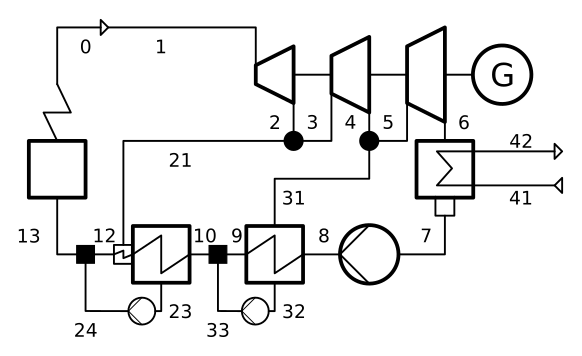
Figure: Topology of the power plant

Figure: Topology of the power plant
What is pymoo?
pymoo ( Multi-objective Optimization in Python, [20]) is a library that provides numerous optimization algorithms. pymoo can be used to solve constrained, unconstrained, single objective and multi objective problems. In this example we will use an evolutionary algorithm to find the optimal pressure values.
Evolutionary Algorithms
Evolutionary Algorithms (EA) are optimization algorithms inspired by biological evolution. In a given population the algorithm uses the so-called fitness function to determine the quality of the solutions to each individual (set of decision variables) problem. The best possible solution of the population is called champion. Via mutation, recombination and selection your population evolves to find better solutions.
EA will never find an exact solution to your problem. They can only give an approximation for the real optimum.
Install pymoo
Installation of pymoo is straight-forward: Just install tespy with the extra dependencies “opt”, e.g. with pip
pip install tespy[opt]
of uv
uv add tespy --extra opt
Creating your TESPy-Model
We use the ModelTemplate base
class, which provides parameter access, solving and optimization infrastructure
automatically. Inheriting from it requires implementing three methods:
_create_network- assembles the TESPy network and produces a stable initial solution. Always callsuper()._create_network()first._parameter_lookup- returns adictthat maps human-readable parameter names to their location in the network. These names are used directly by the optimizer,get_parameterandset_parameters.solve_model- routes calls to the appropriate solve logic (e.g.solve_model_designor custom logic).
The _create_network method below builds the power plant with two
extraction turbines, sets boundary conditions and runs the initial
design-point solve.
Display source code for the SamplePlant class
import numpy as np
from pymoo.algorithms.soo.nonconvex.de import DE  # https://pymoo.org/algorithms/index.html

from tespy.components import CycleCloser
from tespy.components import Sink
from tespy.components import Source
from tespy.components import Condenser
from tespy.components import Desuperheater
from tespy.components import SimpleHeatExchanger
from tespy.components import Merge
from tespy.components import Splitter
from tespy.components import PowerBus
from tespy.components import PowerSink
from tespy.components import HeatSource
from tespy.components import Pump
from tespy.components import Turbine
from tespy.connections import Connection
from tespy.connections import HeatConnection
from tespy.connections import PowerConnection
from tespy.models import ModelTemplate


class SamplePlant(ModelTemplate):

    def _create_network(self):
        super()._create_network()

        self.nw.iterinfo = False
        self.nw.units.set_defaults(**{
            "pressure": "bar", "temperature": "degC", "enthalpy": "kJ/kg",
            "pressure_difference": "bar"
        })
        # components
        # main cycle
        sg = SimpleHeatExchanger("steam generator")
        cc = CycleCloser("cycle closer")
        hpt = Turbine("high pressure turbine")
        sp1 = Splitter("splitter 1", num_out=2)
        mpt = Turbine("mid pressure turbine")
        sp2 = Splitter("splitter 2", num_out=2)
        lpt = Turbine("low pressure turbine")
        con = Condenser("condenser")
        pu1 = Pump("feed water pump")
        fwh1 = Condenser("feed water preheater 1")
        fwh2 = Condenser("feed water preheater 2")
        dsh = Desuperheater("desuperheater")
        me2 = Merge("merge2", num_in=2)
        pu2 = Pump("feed water pump 2")
        pu3 = Pump("feed water pump 3")
        me = Merge("merge", num_in=2)

        # cooling water
        cwi = Source("cooling water source")
        cwo = Sink("cooling water sink")

        # connections
        # main cycle
        c0 = Connection(sg, "out1", cc, "in1", label="0")
        c1 = Connection(cc, "out1", hpt, "in1", label="1")
        c2 = Connection(hpt, "out1", sp1, "in1", label="2")
        c3 = Connection(sp1, "out1", mpt, "in1", label="3", state="g")
        c4 = Connection(mpt, "out1", sp2, "in1", label="4")
        c5 = Connection(sp2, "out1", lpt, "in1", label="5")
        c6 = Connection(lpt, "out1", con, "in1", label="6")
        c7 = Connection(con, "out1", pu1, "in1", label="7", state="l")
        c8 = Connection(pu1, "out1", fwh1, "in2", label="8", state="l")
        c9 = Connection(fwh1, "out2", me, "in1", label="9", state="l")
        c10 = Connection(me, "out1", fwh2, "in2", label="10", state="l")
        c11 = Connection(fwh2, "out2", dsh, "in2", label="11", state="l")
        c12 = Connection(dsh, "out2", me2, "in1", label="12", state="l")
        c13 = Connection(me2, "out1", sg, "in1", label="13", state="l")

        self.nw.add_conns(
            c0, c1, c2, c3, c4, c5, c6, c7, c8, c9, c10, c11, c12, c13
        )

        # preheating
        c21 = Connection(sp1, "out2", dsh, "in1", label="21")
        c22 = Connection(dsh, "out1", fwh2, "in1", label="22")
        c23 = Connection(fwh2, "out1", pu2, "in1", label="23")
        c24 = Connection(pu2, "out1", me2, "in2", label="24")

        c31 = Connection(sp2, "out2", fwh1, "in1", label="31")
        c32 = Connection(fwh1, "out1", pu3, "in1", label="32")
        c33 = Connection(pu3, "out1", me, "in2", label="33")

        self.nw.add_conns(c21, c22, c23, c24, c31, c32, c33)

        # cooling water
        c41 = Connection(cwi, "out1", con, "in2", label="41")
        c42 = Connection(con, "out2", cwo, "in1", label="42")

        self.nw.add_conns(c41, c42)

        electricity = PowerBus("electricity bus", num_in=3, num_out=4)
        grid = PowerSink("grid")

        e1 = PowerConnection(hpt, "power", electricity, "power_in1", label="e1")
        e2 = PowerConnection(mpt, "power", electricity, "power_in2", label="e2")
        e3 = PowerConnection(lpt, "power", electricity, "power_in3", label="e3")
        e4 = PowerConnection(electricity, "power_out1", pu1, "power", label="e4")
        e5 = PowerConnection(electricity, "power_out2", pu2, "power", label="e5")
        e6 = PowerConnection(electricity, "power_out3", pu3, "power", label="e6")
        e7 = PowerConnection(electricity, "power_out4", grid, "power", label="e7")

        # heating
        heat_source = HeatSource("heat source")

        h1 = HeatConnection(heat_source, "heat", sg, "heat", label="h1")

        self.nw.add_conns(e1, e2, e3, e4, e5, e6, e7, h1)

        hpt.set_attr(eta_s=0.9)
        mpt.set_attr(eta_s=0.9)
        lpt.set_attr(eta_s=0.9)

        pu1.set_attr(eta_s=0.8)
        pu2.set_attr(eta_s=0.8)
        pu3.set_attr(eta_s=0.8)

        sg.set_attr(pr=0.92)

        con.set_attr(pr1=1, pr2=0.99)
        fwh1.set_attr(pr1=1, pr2=0.99, ttd_u=5)
        fwh2.set_attr(pr1=1, pr2=0.99, ttd_u=5)
        dsh.set_attr(pr1=0.99, pr2=0.99)

        c1.set_attr(m=200, T=650, p=100, fluid={"water": 1})
        c2.set_attr(p=20)
        c4.set_attr(p=3)
        c6.set_attr(p=0.05)

        c41.set_attr(T=20, p=3, fluid={"INCOMP::Water": 1})
        c42.set_attr(T=28)

        self.nw.solve("design")
        con.set_attr(ttd_u=5)
        c6.set_attr(p=None)

        self.nw.solve("design")
        self._stable_solution = self.nw.save(as_dict=True)
        self._solved = True
        self.nw.print_results()
Next, _parameter_lookup registers lookup between model internals and
keyword parameter specifications for inputs and outputs. Connection attributes
using the ["Connections", label, attr] form, Component attributes
follow the ["Components", label, attr] form. The thermal efficiency is
registered as a read-only derived quantity via {"get": callable}:
The feasibility check inside calc_efficiency returns np.nan
for non-converged or physically infeasible solutions, which the optimizer
treats as a penalty automatically.
Display source code for _parameter_lookup, calc_efficiency and solve_model
    def _parameter_lookup(self):
        return {
            "extraction pressure 1": ["Connections", "2", "p"],
            "extraction pressure 2": ["Connections", "4", "p"],
            "hpt power": ["Components", "high pressure turbine", "P"],
            "hpt pressure ratio": ["Components", "high pressure turbine", "pr"],
            "efficiency": {"get": self.calc_efficiency},
        }

    def calc_efficiency(self):
        if self._solved:
            return (
                self.nw.get_conn("e7").E.val
                / self.nw.get_conn("h1").E.val
            )
        return np.nan

    def solve_model(self, **kwargs):
        self.solve_model_design(**kwargs)
After instantiating the model, all registered parameters are immediately
accessible via get_parameter:
plant = SamplePlant()
plant.get_parameter("efficiency")

num_evo = 20
Attention
The sense of optimization is minimization by default. We can change the
sense for each of the objectives we pass to
optimize
by passing a list with True or False for each individual
objective in identical order as the objectives using the
minimize_flags argument.
We set one inequality constraint - the first extraction pressure must exceed the second:
This is expressed inside the constraints dictionary by referencing the
name of the first parameter as the lower bound of the second. The kpi
argument selects additional model outputs to include in the result log. Here
we track the high-pressure turbine power and pressure ratio.
Run pymoo-Optimization
model.optimize wraps
OptimizationProblem
and a pymoo algorithm into a single call and returns a DataFrame of all
evaluated individuals. For more information on available algorithms see the
list of algorithms.
algorithm = DE(pop_size=20)

result = plant.optimize(
    algorithm=algorithm,
    termination=("n_gen", num_evo),
    variables={
        "extraction pressure 1": {"min": 1, "max": 40},
        "extraction pressure 2": {"min": 1, "max": 40},
    },
    constraints={
        "extraction pressure 1": {"min": "extraction pressure 2"},
    },
    objective=["efficiency"],
    minimize_flags=[False],
    kpi=["hpt power", "hpt pressure ratio"],
)
In our run, we got the following optimal solution:
Efficiency: 44.82 %
Extraction 1: 25.753 bar
Extraction 2: 2.685 bar
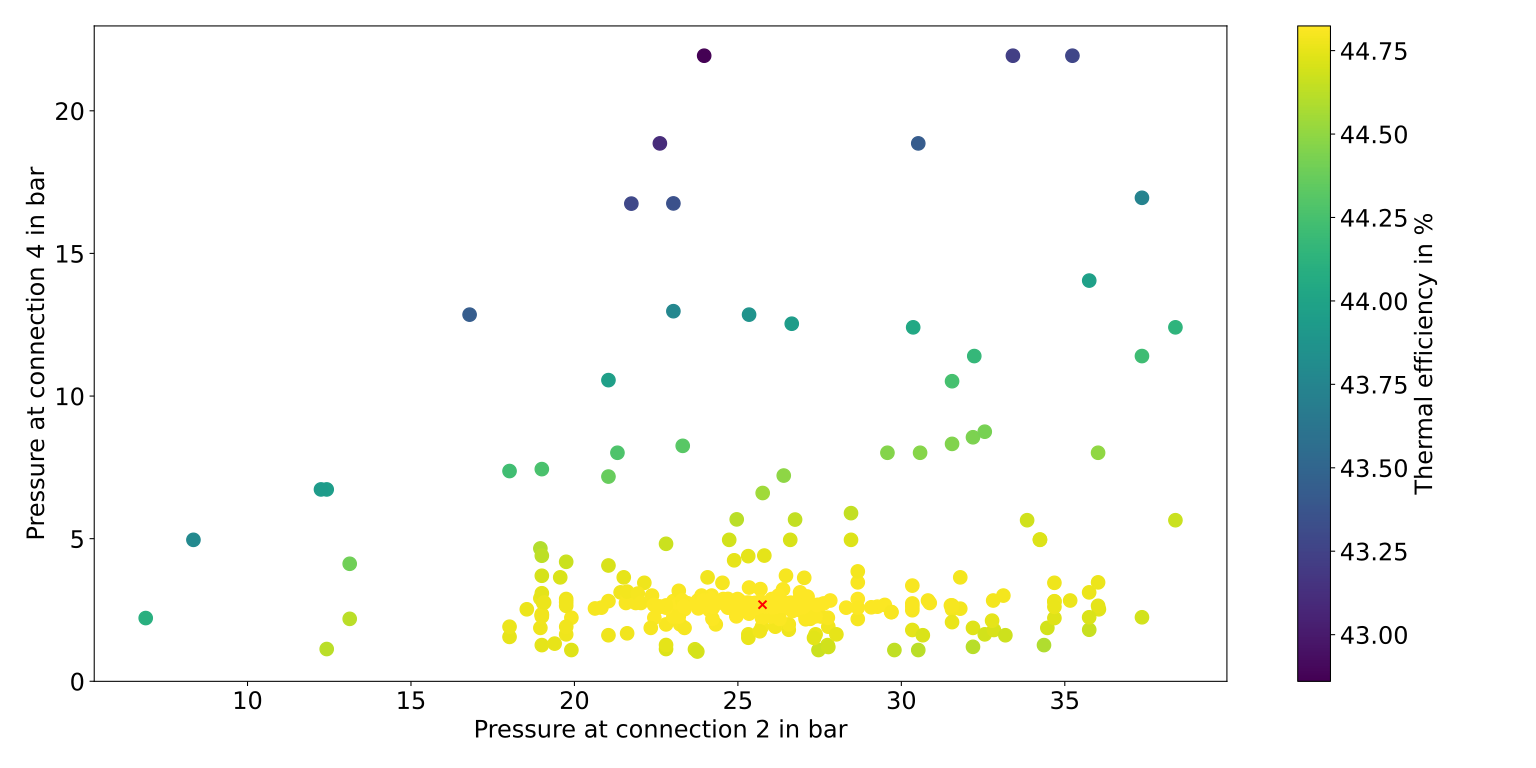
Figure: Scatter plot for all individuals during the optimization
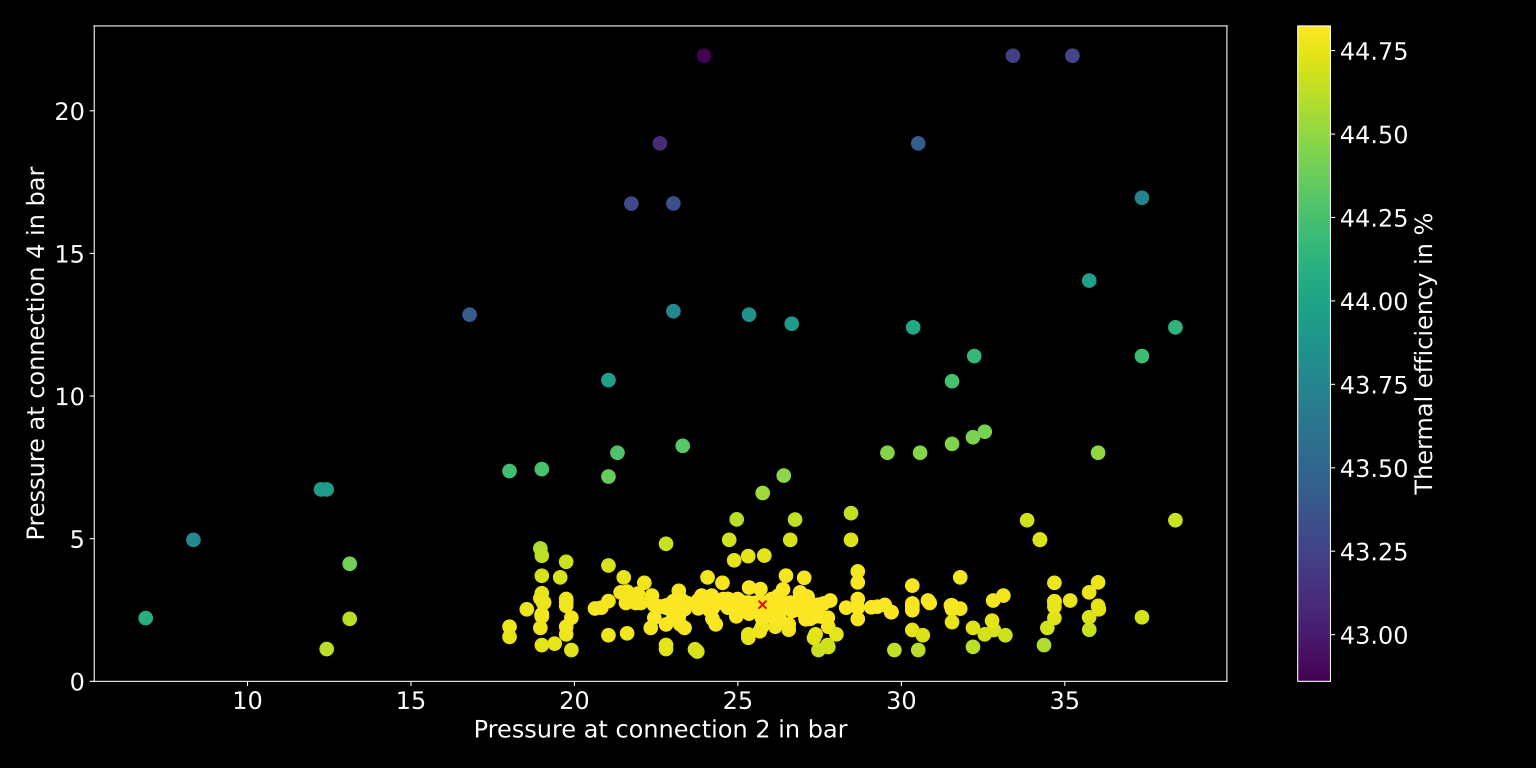
Figure: Scatter plot for all individuals during the optimization
You can access the data generated by the optimization from the returned
DataFrame, which contains every evaluated individual. The plotting code
in the download shows how to filter for feasible solutions and highlight the
optimum.
print(result)

# plot the results
import matplotlib.pyplot as plt

plt.rc("font", **{"size": 18})

fig, ax = plt.subplots(1, figsize=(16, 8))

mask_constraint = result["extraction pressure 1>=extraction pressure 2"] < 0
mask_objective = ~np.isnan(result["efficiency"].values)
data = result.loc[mask_constraint & mask_objective]

sc = ax.scatter(
    data["extraction pressure 1"],
    data["extraction pressure 2"],
    c=data["efficiency"] * 100,
    s=100,
)
best = data.loc[data["efficiency"].values == data["efficiency"].max()]
ax.scatter(
    x=best["extraction pressure 1"],
    y=best["extraction pressure 2"],
    c="red",
    marker="x",
)
cbar = plt.colorbar(sc)
cbar.set_label("Thermal efficiency in %")

ax.set_axisbelow(True)
ax.set_xlabel("Extraction pressure 1 in bar")
ax.set_ylabel("Extraction pressure 2 in bar")
plt.tight_layout()

fig.savefig("optimization_result.svg")
print(best)